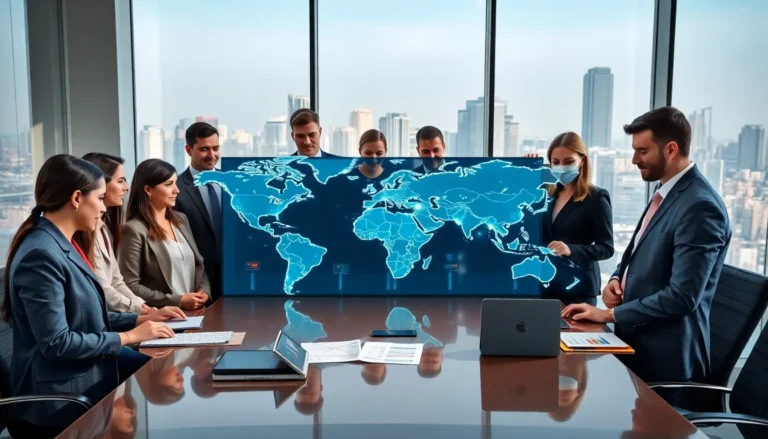
Global affairs shape how nations interact, cooperate, and compete on the world stage. From trade agreements to climate treaties, the decisions made by governments and international organizations affect billions of people daily. Understanding global affairs helps citizens make sense of headlines, foreign policy debates, and the economic forces that influence their communities.
This article breaks down global affairs into clear, practical concepts. It covers the definition of global affairs, its key components, why it matters to everyday life, the major issues driving international politics today, and career paths in this field. Whether someone wants to understand world events better or explore a career in international relations, this guide provides a solid foundation.
Table of Contents
ToggleKey Takeaways
- Global affairs encompasses the study and practice of relationships between countries, international organizations, and non-state actors—including diplomacy, trade, security, and cross-border issues like climate change.
- Understanding global affairs helps citizens make sense of headlines, vote wisely, and anticipate economic shifts that directly impact their daily lives.
- Key players in global affairs include nation-states, international organizations (like the UN and WTO), NGOs, multinational corporations, and influential individuals.
- Major issues shaping global affairs today include climate change, great power competition between the U.S., China, and Russia, global health security, and technology governance.
- Careers in global affairs span government diplomacy, international organizations, NGOs, private sector roles, journalism, and think tanks—with language skills and cultural awareness being highly valued.
- Global events directly affect everyday life through consumer prices, job markets, health outcomes, and security policies.
Defining Global Affairs
Global affairs refers to the study and practice of relationships between countries, international organizations, and non-state actors. It examines how nations pursue their interests while managing conflicts and building cooperation.
At its core, global affairs encompasses diplomacy, international trade, security policy, and cross-border issues like migration and environmental protection. The field draws from political science, economics, history, and law to explain how the international system works.
Global affairs differs slightly from international relations, though the terms often overlap. International relations typically focuses on political interactions between states. Global affairs takes a broader view, including economic systems, cultural exchanges, and transnational challenges that don’t respect national borders.
Several actors drive global affairs:
- Nation-states: Countries remain the primary players, setting foreign policy and negotiating treaties
- International organizations: Bodies like the United Nations, World Trade Organization, and NATO coordinate multilateral action
- Non-governmental organizations (NGOs): Groups like Amnesty International and Doctors Without Borders influence policy and deliver services across borders
- Multinational corporations: Companies operating in multiple countries shape trade patterns and economic policy
- Individuals: Leaders, activists, and experts can significantly impact international outcomes
Global affairs also involves understanding power dynamics. Some nations hold more influence due to military strength, economic size, or diplomatic networks. How power shifts between countries creates much of the tension, and opportunity, in world politics.
Key Components of Global Affairs
Global affairs covers several distinct but interconnected areas. Each component plays a role in shaping how the world operates.
Diplomacy and Foreign Policy
Diplomacy involves negotiations between nations to resolve disputes, form alliances, and advance national interests. Foreign policy refers to a government’s strategy for engaging with other countries. Embassies, consulates, and diplomatic missions carry out this work daily.
International Trade and Economics
Trade agreements, tariffs, and economic sanctions fall under global affairs. Organizations like the World Trade Organization set rules for commerce between nations. Economic interdependence means that a recession in one major economy can ripple across the globe.
Security and Defense
Military alliances, arms control treaties, and counterterrorism efforts make up the security dimension. NATO represents one example of collective defense, where member nations agree to protect each other. Global affairs professionals analyze threats and develop strategies to maintain peace.
Human Rights and Humanitarian Issues
International law establishes standards for how governments treat their citizens. The Universal Declaration of Human Rights sets benchmarks that nations reference in treaties and domestic law. Humanitarian crises, from refugee flows to natural disasters, require coordinated international responses.
Environmental and Climate Policy
Climate change doesn’t recognize borders. Global affairs includes negotiations like the Paris Agreement, where countries commit to reducing emissions. Environmental policy also covers ocean governance, biodiversity protection, and managing shared resources like rivers and forests.
Technology and Cybersecurity
Digital infrastructure now supports global commerce, communication, and governance. Cyberattacks can disrupt entire economies. Global affairs increasingly addresses questions about internet governance, data privacy across borders, and the security of critical systems.
Why Global Affairs Matter in Everyday Life
Global affairs might seem distant from daily routines, but international events touch nearly every aspect of modern life.
Economic impacts hit wallets directly. When countries impose tariffs, consumer prices rise. Supply chain disruptions, like those seen during recent global crises, can empty store shelves. Interest rates set by central banks respond partly to international economic conditions. Someone buying groceries or filling up their car experiences global affairs in real terms.
Security decisions affect communities. Military deployments, defense spending, and immigration policies stem from global affairs calculations. The presence or absence of conflict overseas shapes everything from gas prices to the safety of travelers abroad.
Health depends on international cooperation. Pandemics spread across borders in days. The World Health Organization coordinates responses to disease outbreaks. Access to vaccines and medical supplies often requires international agreements and logistics.
Job markets reflect global trends. Manufacturing jobs may move to countries with lower labor costs. Service industries grow when international trade expands. Understanding global affairs helps workers anticipate shifts in employment opportunities.
Cultural exchange enriches societies. International students, immigrants, and tourists bring ideas, food, and traditions. Global affairs policies determine who can cross borders and under what conditions.
Staying informed about global affairs helps citizens vote wisely, invest smartly, and understand why their government makes certain decisions. It transforms confusing headlines into comprehensible patterns.
Major Issues Shaping Global Affairs Today
Several issues dominate current global affairs discussions. These challenges require international cooperation and will likely shape world politics for decades.
Climate Change and Energy Transition
Rising temperatures, extreme weather, and sea-level changes threaten every nation. Countries debate how to reduce carbon emissions while maintaining economic growth. The shift from fossil fuels to renewable energy sources creates winners and losers among nations.
Great Power Competition
Relations between the United States, China, and Russia define much of contemporary global affairs. Trade disputes, military posturing, and technological competition between these powers affect smaller nations caught in between. How these relationships evolve will shape the international order.
Global Health Security
Recent pandemics exposed weaknesses in international health systems. Preparing for future outbreaks requires better surveillance, faster vaccine development, and improved coordination between health agencies worldwide.
Migration and Refugee Crises
Conflicts, economic hardship, and climate impacts push millions of people to leave their homes. Managing migration flows while protecting human rights challenges governments across the globe.
Technology Governance
Artificial intelligence, social media, and cyber warfare raise new questions for global affairs. Nations struggle to agree on rules for digital spaces. Misinformation campaigns and cyber espionage blur traditional lines between war and peace.
Economic Inequality
Gaps between wealthy and developing nations persist even though decades of aid and trade programs. How to distribute the benefits of globalization more fairly remains a central debate in global affairs.
Careers and Education in Global Affairs
A career in global affairs offers diverse paths for those interested in international issues.
Educational Pathways
Most careers in global affairs require at least a bachelor’s degree in international relations, political science, economics, or a related field. Many professionals pursue master’s degrees from schools with strong international affairs programs. Language skills significantly boost career prospects, Mandarin, Arabic, Spanish, and French remain particularly valuable.
Career Options
Government service includes diplomatic positions with the State Department, intelligence analysis, and policy roles in various agencies. Foreign Service Officers represent their country abroad and negotiate on its behalf.
International organizations like the United Nations, World Bank, and regional bodies hire specialists in development, security, economics, and humanitarian affairs.
Non-governmental organizations need program managers, researchers, and advocates working on issues from human rights to environmental protection.
Private sector opportunities exist in multinational corporations, consulting firms, and financial institutions that operate globally. Companies need professionals who understand international markets, regulations, and political risks.
Journalism and media organizations hire correspondents and analysts to cover global affairs for public audiences.
Think tanks and research institutions employ scholars who produce policy analysis and advise government officials.
Skills That Matter
Beyond education, global affairs careers reward strong writing, analytical thinking, cultural awareness, and adaptability. Experience living or working abroad demonstrates practical understanding that employers value.