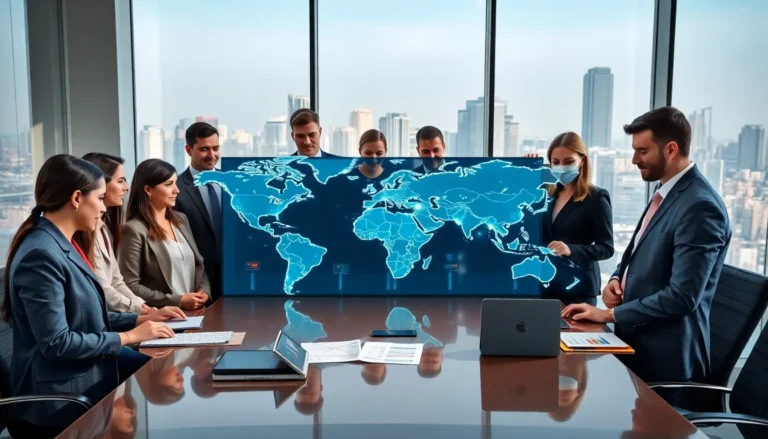
Global affairs trends 2026 will reshape international relations in significant ways. Nations face new alliances, economic shifts, and technological disruptions that demand attention from policymakers and citizens alike. The year ahead brings both challenges and opportunities across multiple fronts.
This article examines the most important global affairs trends 2026 has in store. From changing power structures to climate action, trade realignments to security threats, these developments will define how countries interact and compete. Understanding these trends helps readers make sense of headlines and anticipate what comes next.
Table of Contents
ToggleKey Takeaways
- Global affairs trends 2026 will be defined by shifting power dynamics as middle powers like Brazil, Indonesia, and Turkey leverage multipolar competition to their advantage.
- Climate diplomacy becomes critical in 2026, with developing nations demanding increased climate finance and loss and damage compensation from wealthier countries.
- Supply chain diversification accelerates as companies reduce reliance on China, with Vietnam, Mexico, and India emerging as top manufacturing destinations.
- AI governance, cybersecurity threats, and space competition highlight the growing gap between technological advancement and international regulatory frameworks.
- Regional conflicts including the Russia-Ukraine war, Taiwan Strait tensions, and Middle East instability remain unresolved, demanding sustained diplomatic attention.
- Africa gains geopolitical importance in global affairs trends 2026 as major powers compete for influence across the continent.
Shifting Geopolitical Power Dynamics
The balance of power continues to shift in 2026. China expands its influence through infrastructure investments and diplomatic outreach across Africa, Southeast Asia, and Latin America. The Belt and Road Initiative enters a new phase with updated financing models and stronger local partnerships.
The United States responds by strengthening alliances in the Indo-Pacific region. AUKUS (Australia, UK, US) deepens military cooperation. Japan and South Korea take on larger regional security roles. India emerges as a key swing state that both Washington and Beijing court actively.
Europe faces pressure to define its strategic autonomy. The European Union works to reduce energy dependence on Russia while maintaining economic ties with China. France and Germany lead efforts to build independent defense capabilities. NATO expansion in Scandinavia reshapes alliance dynamics.
Middle powers gain prominence in global affairs trends 2026. Brazil, Indonesia, Turkey, and Saudi Arabia leverage their positions to extract concessions from major powers. These nations refuse to align exclusively with any bloc, creating a more multipolar international system.
Climate Diplomacy and Environmental Policy
Climate action ranks high among global affairs trends 2026 will be remembered for. The Paris Agreement enters a critical implementation phase. Countries submit updated emissions targets under the global stocktake process. Gap between pledges and action draws scrutiny.
Developing nations demand increased climate finance from wealthy countries. The $100 billion annual funding promise remains partially unmet. Loss and damage compensation becomes a major negotiating point. Small island states push for binding commitments as sea levels rise.
Climate migration emerges as a security concern. Droughts in Central America drive northward movement. Water scarcity in the Middle East and North Africa creates regional tensions. International frameworks for climate refugees remain inadequate.
Green technology transfers spark diplomatic disputes. China dominates solar panel and battery production. The US and EU impose tariffs to protect domestic clean energy industries. Global affairs trends 2026 include growing friction over who controls the green transition.
Economic Realignments and Trade Relations
Trade patterns shift dramatically among global affairs trends 2026. Supply chain diversification accelerates as companies reduce dependence on single countries. Vietnam, Mexico, and India attract manufacturing investment that once flowed to China.
Regional trade blocs gain strength. The Regional Comprehensive Economic Partnership (RCEP) deepens Asian economic integration. The African Continental Free Trade Area (AfCFTA) expands implementation. North America tightens its supply chains under USMCA provisions.
Currency politics heat up. China promotes yuan usage in international trade. The BRICS nations discuss alternative payment systems. Dollar dominance faces questions though no replacement emerges. Central bank digital currencies create new opportunities and risks.
Sanctions become a primary foreign policy tool. Western nations target Russia’s energy sector and Chinese technology firms. Secondary sanctions affect third-country businesses. Global affairs trends 2026 show economic warfare replacing military confrontation in many disputes.
Emerging Technology and Global Governance
Artificial intelligence governance tops international agendas. Nations debate how to regulate AI development and deployment. The EU implements its AI Act while the US takes a lighter approach. China advances its own standards. No global consensus exists.
Cybersecurity threats intensify across global affairs trends 2026. State-sponsored hacking targets critical infrastructure. Ransomware attacks hit hospitals, utilities, and government systems. International norms for cyberspace remain weak even though diplomatic efforts.
Space becomes increasingly contested. China and the US compete for lunar resources. Satellite constellations crowd Earth’s orbit. Space debris poses collision risks. The Outer Space Treaty proves inadequate for current challenges.
Biotechnology raises new questions. Gene editing, synthetic biology, and pandemic preparedness require international coordination. The World Health Organization pushes for pandemic treaty adoption. Global affairs trends 2026 highlight gaps between technological capability and governance frameworks.
Regional Conflicts and Security Challenges
Several conflict zones demand attention in global affairs trends 2026. The Russia-Ukraine war enters its fourth year with no clear resolution. Frozen conflict scenarios become more likely. European security architecture requires rebuilding.
Taiwan Strait tensions persist. China increases military exercises near the island. The US maintains strategic ambiguity while strengthening deterrence. Economic interdependence provides some restraint but risks remain elevated.
Middle East instability continues. Iran’s nuclear program advances even though diplomatic efforts. Israel faces ongoing security challenges. Yemen, Syria, and Libya remain fragmented. Saudi-Iranian competition shapes regional dynamics.
Africa experiences both progress and setbacks. Democratic transitions succeed in some nations while coups occur in others. The Sahel region struggles with extremist violence. Ethiopia works to stabilize after civil conflict. Global affairs trends 2026 show Africa gaining geopolitical importance as powers compete for influence.